UKRAINE FACILITY INSTRUMENT FOR PRIVATE BUSINESS
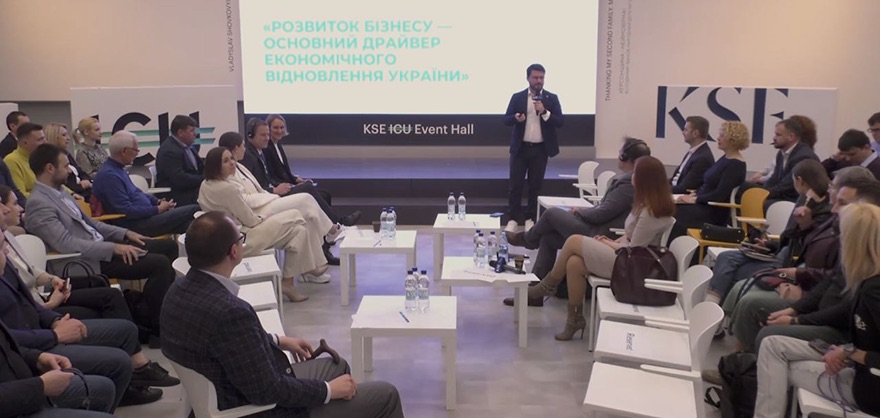
On April 26, 2024, the Kyiv School of Economics, in partnership with the Ministry of Economy of Ukraine, held a roundtable discussion titled “Business Development - The Main Driver of Ukraine’s Economic Recovery.” The discussion focused on the Ukraine Facility program (https://www.ukrainefacility.me.gov.ua), its reforms, development incentives, and Pillars-based financing principles, particularly emphasizing Pillar II. One of the topics discussed involved preparing an investment projects pipeline for Ukraine’s Recovery Conference, which is planned for June 2024 in Berlin. Representatives of international financial institutions, such as the EBRD, EIB, and BGK, spoke separately and provided their perspectives on what IFIs and Ukrainian banks prioritize when financing projects under Pillar II. The event was attended by representatives of the UWEA and its member companies. Natalia Shapoval, Head of KSE Institute, was responsible for moderation.
Key macroeconomic indicators and highlights, presented during the event:
- According to the World Bank, Ukraine requires USD 486 billion for its reconstruction and recovery, with USD 47 billion for energy, USD 117 billion for SMEs, and USD 148 billion for the infrastructure sector.
- The Ukraine Facility program prioritizes the energy sector, which involves creating conditions for RES deployment and investment attractiveness, integrating into the EU market, liberalizing the gas and electricity market, ensuring the independence of the National Regulator, and improving energy efficiency, etc.
- 2024-2027 investment indicators for the energy sector include modernization and energy efficiency, physical protection of energy infrastructure, and RES development. A total of 109 indicators are focused on improving Ukraine’s business environment.
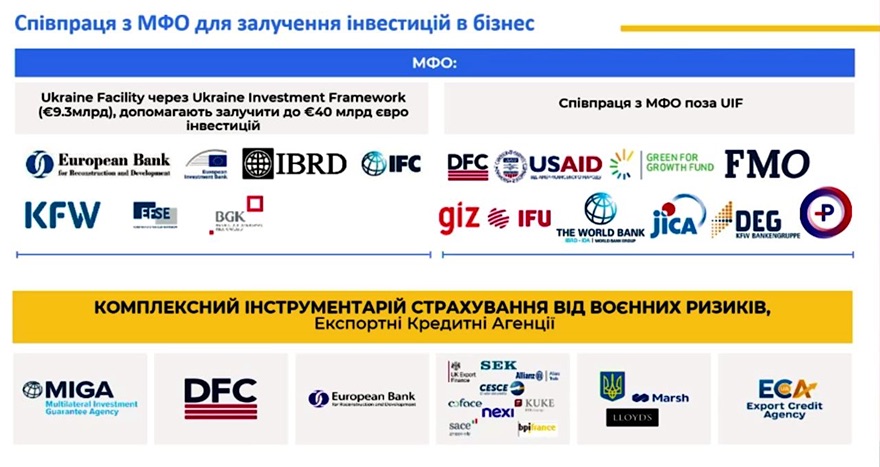
- There are three Pillars of the Ukraine Facility and the corresponding Government Plan: Pillar I – Direct support to the state budget amounting to EUR 38.27 billion; Pillar II - Ukraine Investment Framework (UIF) amounting to EUR 9.3 billion, 20% of which will be allocated to the “green” transition; Pillar III - Technical and Administrative Support amounting to EUR 4.76 billion.
- The financial sources under the UIF are EUR 7.8 billion in Ukrainian guarantees and EUR 1.5 billion in mixed EU funding (blending/grants and technical assistance (consulting businesses on preparing applications, finalizing projects, etc)).
- Under the UIF: operations for the private sector will be initiated by IFIs based on demand from private companies; public projects will be initiated by the Government based on public investment management and a single project list; preliminary distribution between private and public sectors is not provided.
- The Ukrainian guarantee is a special risk-sharing instrument that will be available to IFIs supporting projects in Ukraine. The guarantee covers almost 90% of financial risks on various transactions in the public and private sectors, including: loans (including in national currency), guarantees, counter-guarantees, capital market tools, insurance, equity, or quasi-equity.
- Currently, there are three options for accessing UIF funds: direct (IFIs finance directly large corporations and municipalities from EUR 10-20 million); indirect (IFIs finance up to EUR 5 million through local partners - Ukrainian banks - Oschadbank, Ukreximbank, Ukrgasbank, and some private banks); mixed (IFIs finance directly through Ukrainian banks (public and some private)).
- War risk insurance is available from MIGA’s USD 100 million fund, directly for equity. The EBRD insures logistics, goods on the way, in particular to ports, etc.
Volodymyr Kuzio, the Deputy Minister of Economy of Ukraine: “The Government's work today focuses on three areas: risk reduction, which involves initiatives designed to mitigate the risks associated with investing in Ukraine; financial incentives and tools, including measures to promote investment in both private and public sectors, expand collaboration with IFIs, and adopt laws that aim to attract investment; business environment improvement, i.e., bringing the regulatory framework in line with international standards, increasing the efficiency and transparency of regulation, reducing administrative barriers and digitizing market access tools.”
Josalyn Korne, Head of the Group on Reconstruction and Infrastructure of the EU Delegation to Ukraine: “The EU has been supporting Ukraine's macro-financial stability since the beginning of the war and has already invested EUR 11.5 billion in the Ukrainian economy. In addition, EU-funded de-risking programs in Ukraine currently amount to some EUR 2.2 billion in total investment volumes, backed by around EUR 500 million in the form of guarantees, incentive grants, and capital investment.”
Luca Ponzellini, Senior Loan Officer, Middle East, North Africa, Eastern Europe & Central Asia · European Investment Bank: “Today, the EIB is working on several key areas: financing specific banks, providing individual guarantees/resharing (in particular, in December 2023, the EU4Business Guarantee program was launched) and technical support (capacity building) for local SMEs.”