
 Authorization

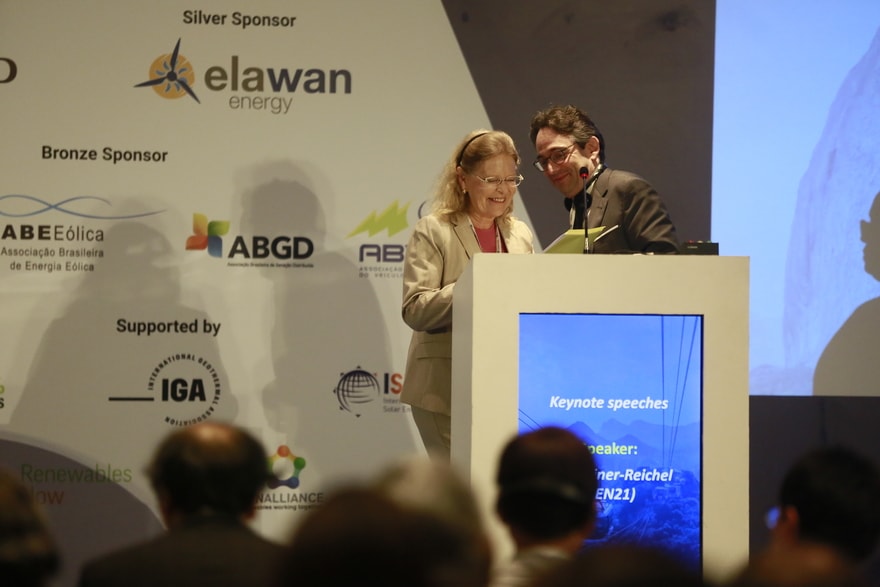
On 26 November 2019 REN 21 presented its new Global Status Report “Renewables in City” within the 18th World Wind Energy Conference (WWEC 2019), which was held in Rio de Janeiro on 25-27 November 2019. The cities report is the first comprehensive resource to map out the current trends and renewable energy developments in cities and the role of local action in the renewable energy transition. It looks at trends and developments of renewable energy in cities and its associated benefits, including impacts on air pollution, energy security and access, and socio-economic issues etc.
The REN21 experts came to the following conclusions:
1. Thousands of cities and local governments have adopted renewable energy-specific targets and action plans, and around 250 cities worldwide have targets for 100% renewable energy.
2. For the sustainable energy transition to succeed, two key elements are necessary: a) renewables must be deployed much more rapidly not only in the electricity sector but also in all economic sectors, including the end-use sectors of transport, industry, and heating and cooling; b) widespread electrification is needed.
3. The main policy instruments used by cities can be broken down into four key categories: procurement and direct investment, mandates and obligations, fiscal and financial incentives, enabling policies and urban planning/zoning.
4. China and Chinese cities remain at the forefront in terms of speed and efficiency of RES implementation (32% of global investment is invested in RES development. In 2018, China implemented the largest RES capacity - 727 GW (when the United States implemented 260 GW) and 95% moved to electric cars). The cities of India became the second in terms of installed capacity this year. The cities of Indonesia, Japan, Pakistan and the Philippines have made significant progress in geothermal, hydropower and solar power, while Thailand has seen a significant increase in ethanol production.
5. Due to higher average income levels and a wider and more established tax base, European cities are far more profitable to accelerate the transition to green energy. German cities are leading the list in RES capacity in Europe, although cities in Iceland, Denmark and Sweden are leading in terms of installed capacity per capita and cities in Austria, Cyprus and Greece have the highest solar capacity per capita.
6. Latin American cities implement their RES projects with the help of private companies. More investments are made in the purchase of electricity, and renewable energy is often purchased from neighboring cities and countries.
7. North America is famous for the heterogeneity of the distribution of municipal governments among states, which has a bad effect on the distribution of funding, including RES. In US cities, public initiatives are increasingly influencing the development of RES and the attraction of investment in projects.
8. In the Middle East and Africa, city authorities are completely deprived of the opportunity to implement green projects, mostly all decisions being made at the national level or with the involvement of businesses.
9. Cities, communities and local authorities should encourage their residents to move to “green” energy at the local level for the rapid and efficient implementation of RES around the world. To take full advantage of what cities can do on the energy front, it is important to create integrated frameworks at the national, sub-national and city levels. Energy strategies across multiple government levels should be coherent and directed towards the common goal of accelerating the renewable energy transition.
The full report can be found at: https://www.ren21.net/wp-content/uploads/2019/05/REC-2019-GSR_Full_Report_web.pdf

 Home
Home