
 Authorization

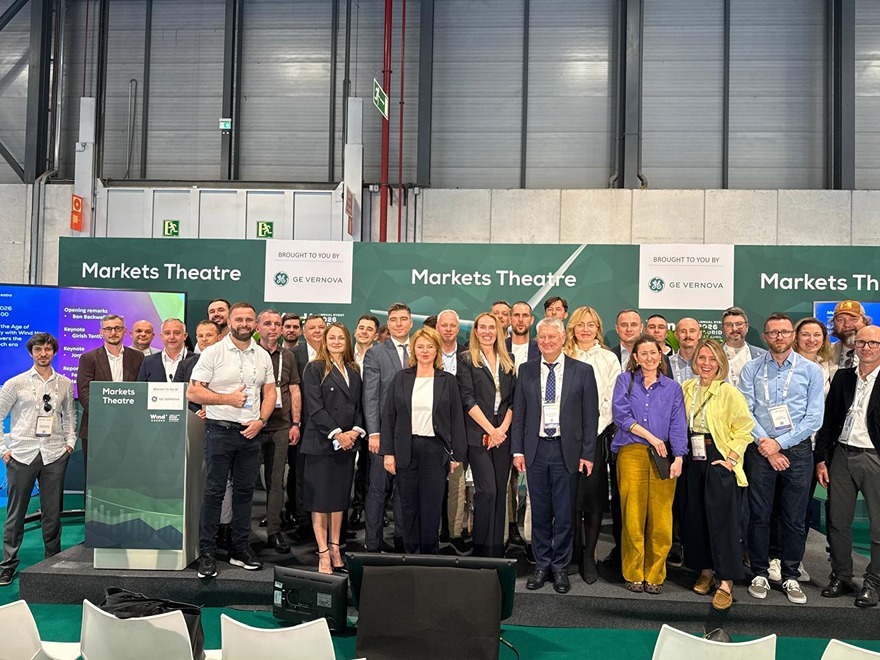
On 21 April 2026, as part of the WindEurope Annual Event 2026 in Madrid, the UWEA hosted a panel discussion – “Human Capital as the Key to RES Development in Ukraine,” dedicated to the role of human capital in advancing the renewable energy sector.
The session was moderated by Ivan Bondarchuk, First Deputy Chairman of the Board of the Ukrainian Wind Energy Association and Partner at LCF Law Group. The discussion brought together representatives of development companies, international equipment manufacturers, and human resource experts—all members of the UWEA.
According to Alina Shyshkina, Deputy Executive Director at ETG.UA, Ukraine currently retains a sufficient basic workforce in construction for small and medium-sized projects up to 100 MW. However, the market is already experiencing a noticeable shortage of specialists in more complex segments—namely engineering, electrical works, commissioning, and operational management of wind farms. As a result, the availability of qualified personnel is increasingly factored in by developers and investors as a distinct risk when making investment decisions and reaching the FID stage.
Olena Umanets, Director at Navitas Renewables Ukraine, emphasized that the Ukrainian renewable energy market requires the scaling up of local teams to accommodate the growing volume of new projects, particularly the portfolios scheduled for construction starting in 2027. Meanwhile, the level of qualification and practical experience of personnel remains a key challenge, directly impacting the quality and timelines of project implementation. In this context, developing local training and capacity-building programs for specialists in Ukraine must become a market priority.
Anzhela Pradun, Director at Vestas Ukraine, highlighted that the certification of contractors and the expansion of warranty or service obligations are directly linked to risk management and quality assurance. For local companies to integrate into the company’s service and installation ecosystem, they must adhere to strictly defined technical and safety standards, complete certified training programs, possess a proven track record in project execution, maintain effective HSE processes, and undergo regular audits and quality control. Provided these conditions are met, Vestas is open to certifying local contractors and deepening cooperation with them.
In turn, Sarah Petrycer Hansen, Head of the Danish organization Mentor to Impact, stressed that the development of renewable energy sources is inextricably linked to high-quality specialist training for the sector, with a focus on educating students and reskilling professionals transitioning into renewables. According to her, the key to solving the workforce shortage lies precisely in consolidating the efforts of all market players – from state institutions and private companies to the NGO sector.
Summarizing the discussion, Ivan Bondarchuk noted that the development of renewable energy in Ukraine increasingly depends not only on financing or the regulatory environment but also on the availability of high-quality human capital. He pointed out that the market is already facing constraints regarding the availability of qualified personnel, which is beginning to impact project timelines and economics, and therefore must be accounted for as a full-fledged risk factor. Ultimately, an effective response to this challenge is only possible through coordinated cooperation among all market participants—focusing on systemic development, training, and reskilling of personnel in Ukraine.

 Home
Home