
 Authorization

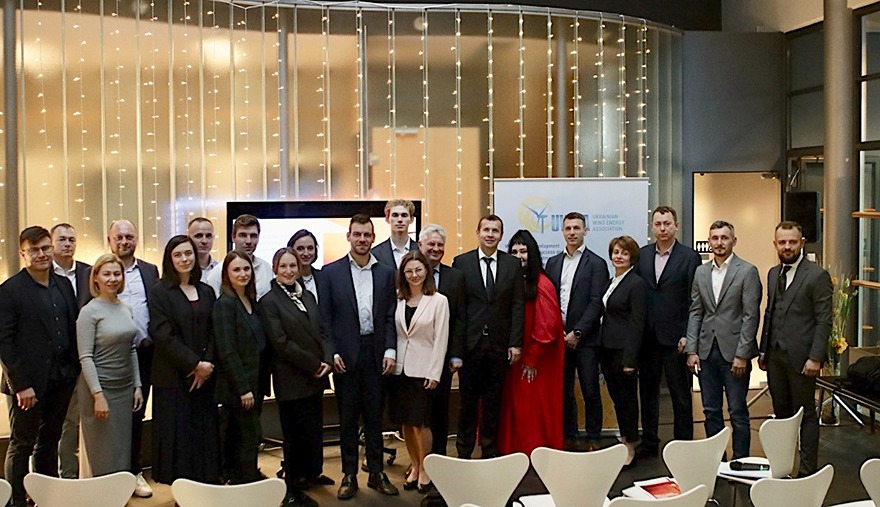
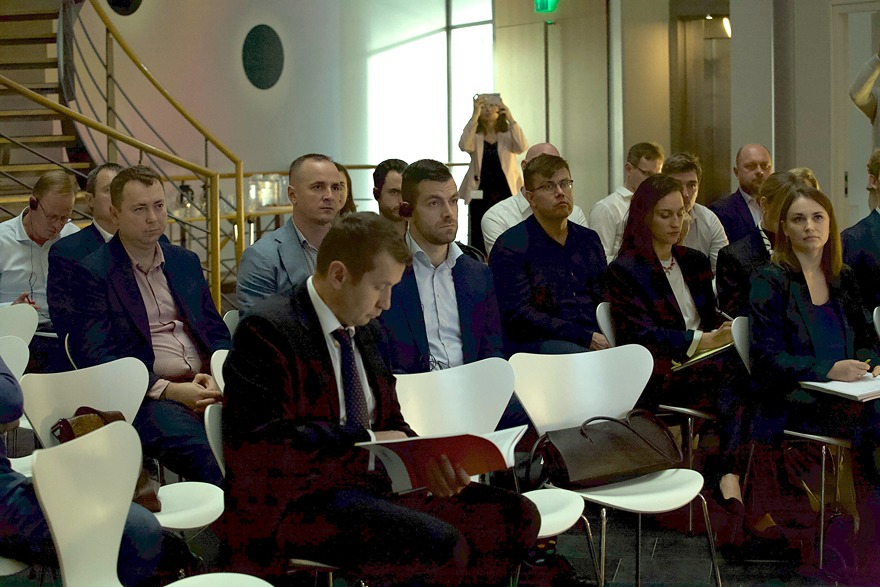
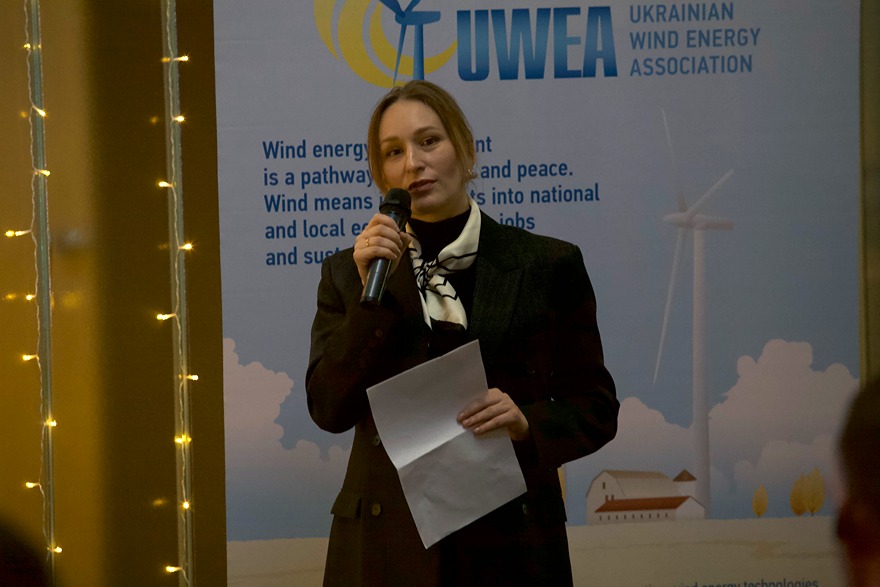
On October 10, 2024, the Embassy of the Kingdom of the Netherlands in Ukraine hosted the formal launch of the report “Legislation Fostering Wind Energy Development in Ukraine” by the Ukrainian Wind Energy Association (the UWEA). The report represents the outcomes of a special project aimed at identifying gaps in existing RES legislation and proposing comprehensive reforms to ensure the effective growth of wind energy in Ukraine. The proposed legislative changes cover environmental, construction, land, and other aspects of the wind energy project development and implementation process, as well as issues related to grid connection.
The project was made possible through the financial support of the Netherlands Enterprise Agency under the Ministry of Economic Affairs and Climate Policy of the Netherlands (RVO), with expert contributions from leading legal firms specializing in energy law, including LCF, Asters, INTEGRITES, Dentons, ARZINGER, DTEK Renewables, all of which are the UWEA members.
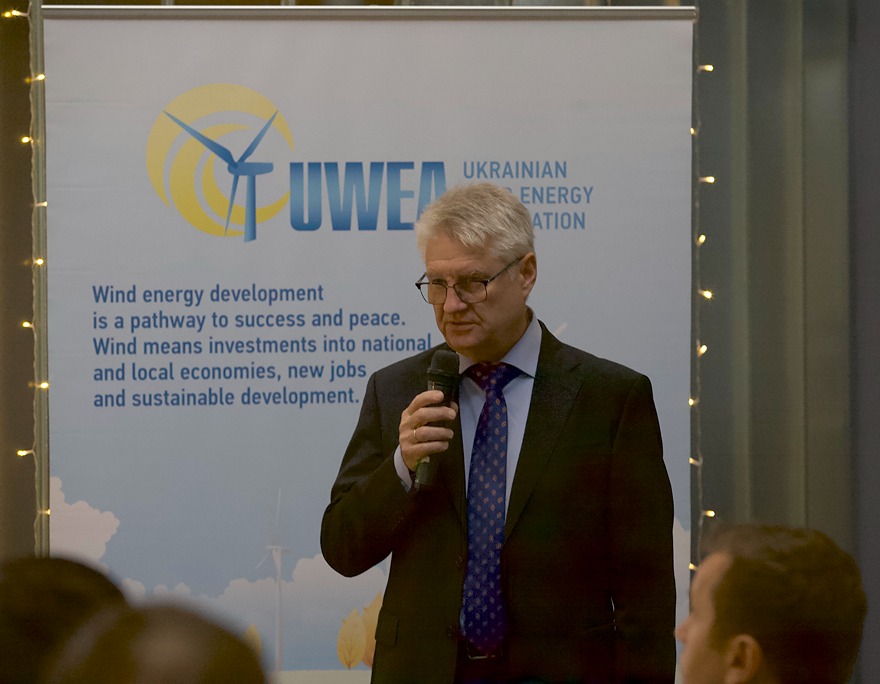
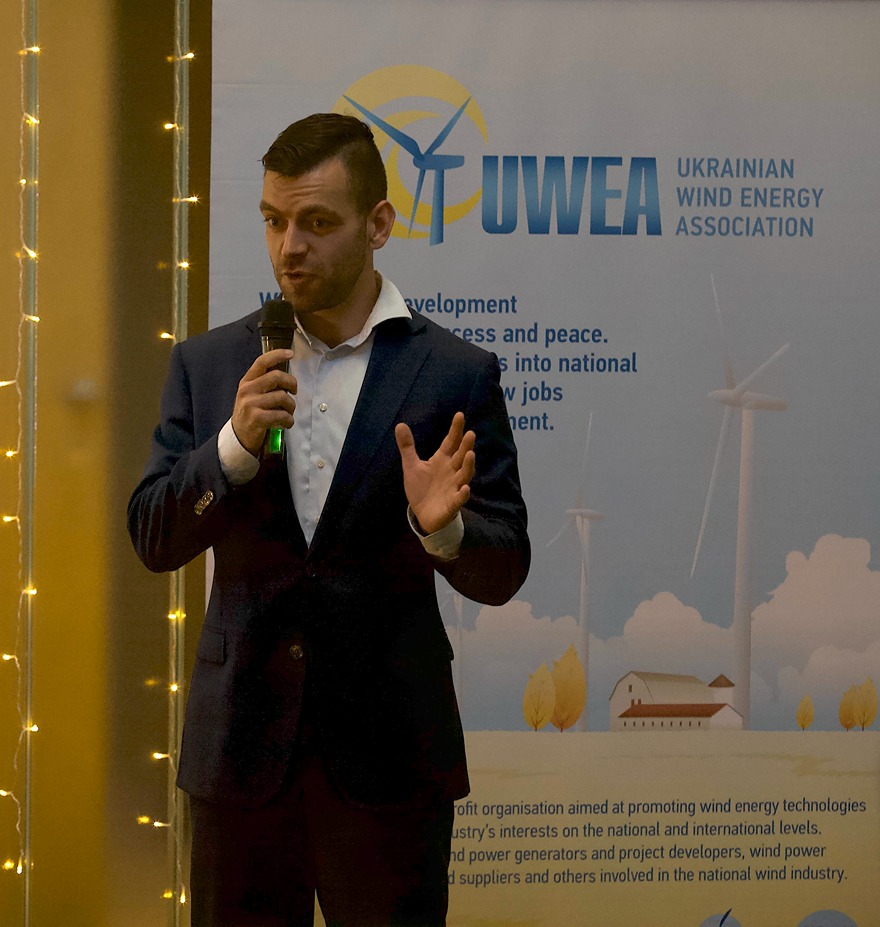
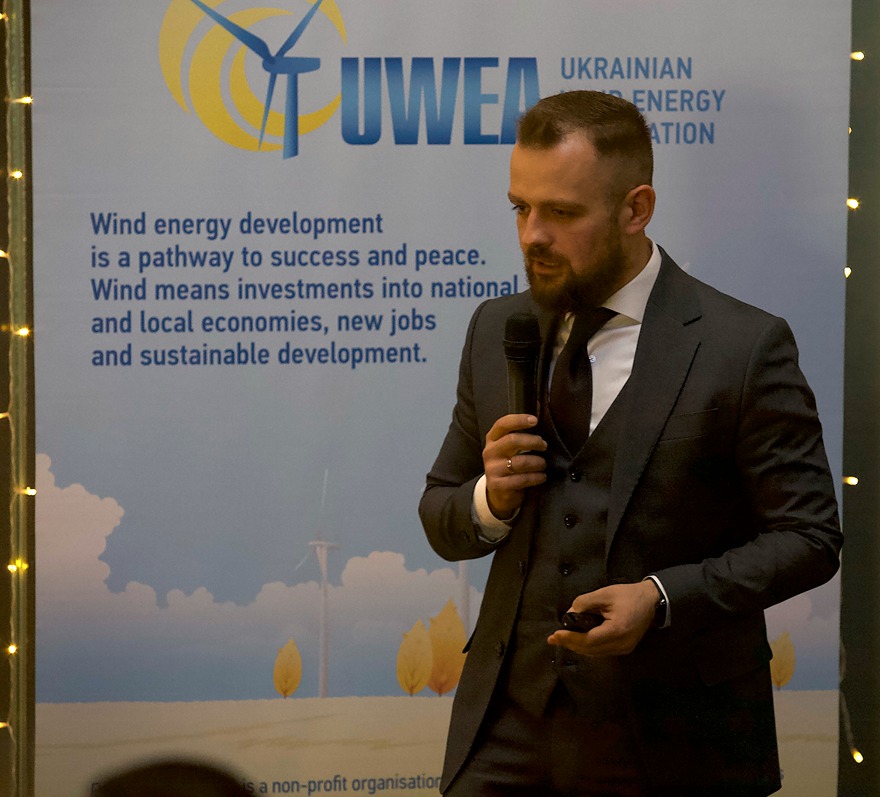
Andriy Konechenkov, Chairman of the UWEA Board and moderator of the event stated, “Through close collaboration and dialogue with actual market participants, and with the support of our Dutch partners, we developed this report. We hope that the adoption of the proposed changes to the sector's regulatory framework will simplify and accelerate the development of wind energy projects in Ukraine, foster a transparent, competitive, and, most importantly, predictable market environment, achieve the renewable energy development goals set in the National Renewable Energy Action Plan for 2030, and, ultimately, protect and attract private investment to Ukraine.”
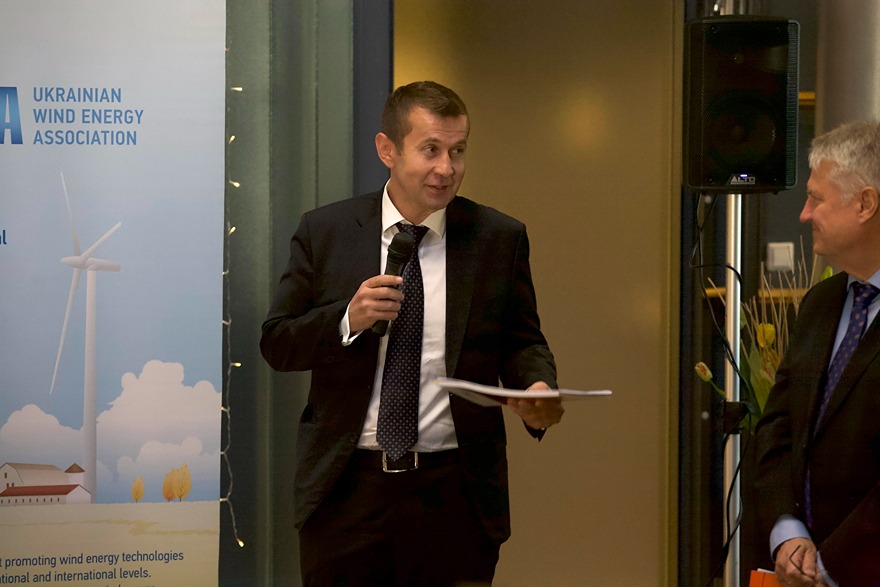
Brem Romijn, Energy and Climate Attaché at the Embassy of the Kingdom of the Netherlands in Ukraine, remarked, “In the Netherlands, wind energy holds a special place. It is immensely important for our citizens. We believe that, under the current wartime conditions, wind energy represents a real solution for Ukraine, offering diversification and decentralization of its energy system. We see that the Ukrainian government shares this view, and we are pleased to contribute to the development of this sector. Enhancing the relevant legislative framework is critically important for investors at this moment.”
In his welcoming remarks, Serhii Vlasenko, Deputy Minister of Environmental Protection and Natural Resources of Ukraine, commented, “The presented report is indeed a thorough study. The Ministry is currently analyzing its section on legislative changes regarding Environmental Impact Assessments (EIA) and Strategic Environmental Assessments (SEA). Our Ministry fully supports wind deployment, as it is a 'green' solution and electricity generation that facilitates the energy transition away from fossil fuels. We will actively participate in implementing the recommendations provided in the report.”
Yurii Shafarenko, Deputy Head of the Main Department of the Directorate for Economic Policy of the Office of the President of Ukraine, in turn, noted, “We, at the Office of the President of Ukraine, have reviewed the report and conceptually support the implementation of the proposed legislative changes. Today, wind energy plays a crucial role for Ukraine, especially during the autumn-winter period, and it is essential to create the maximum possible incentives for the further development of this sector in Ukraine.”
“I want to thank the relevant Ministries for their support and willingness to further work on our recommendations. Yesterday, we also presented this report to the First Deputy Prime Minister and Minister of Economy, Yuliia Svyrydenko, and Andrii Gerus, Chairman of the Verkhovna Rada Committee on Energy and Utilities. I am confident that this 122-page report can serve as the foundation for significantly improving the investment climate in Ukraine's wind energy sector,” concluded Andriy Konechenkov, summing up the introductory part of the event.
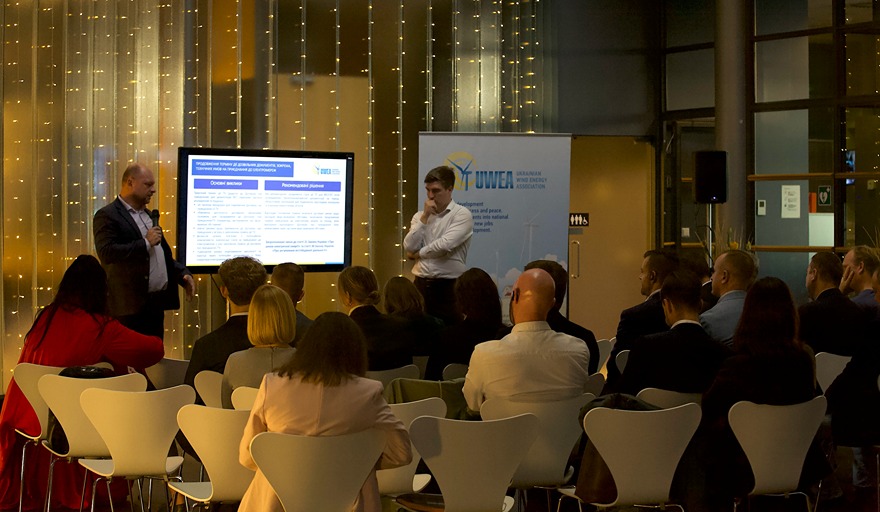
In the second part of the event, the report's authors shared key findings and recommendations developed as a result of the analysis conducted.
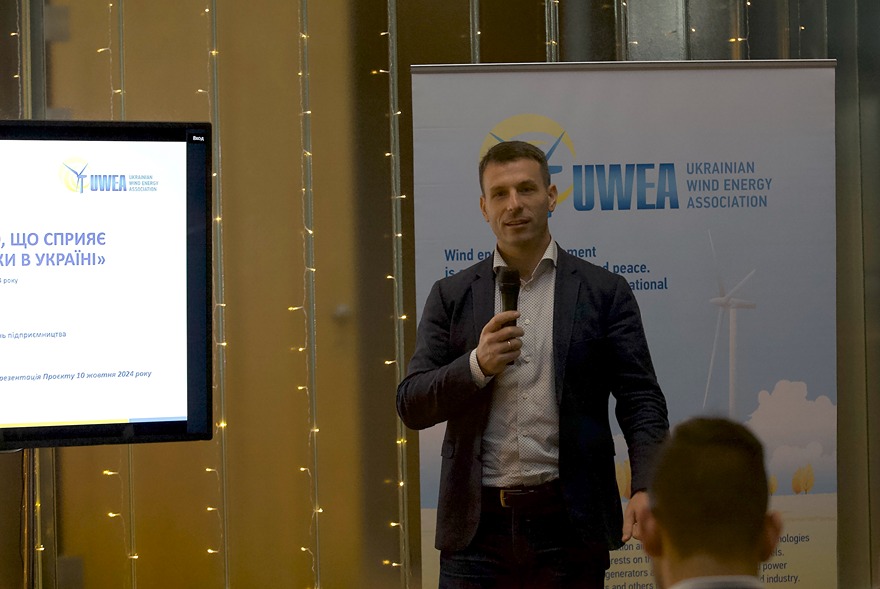
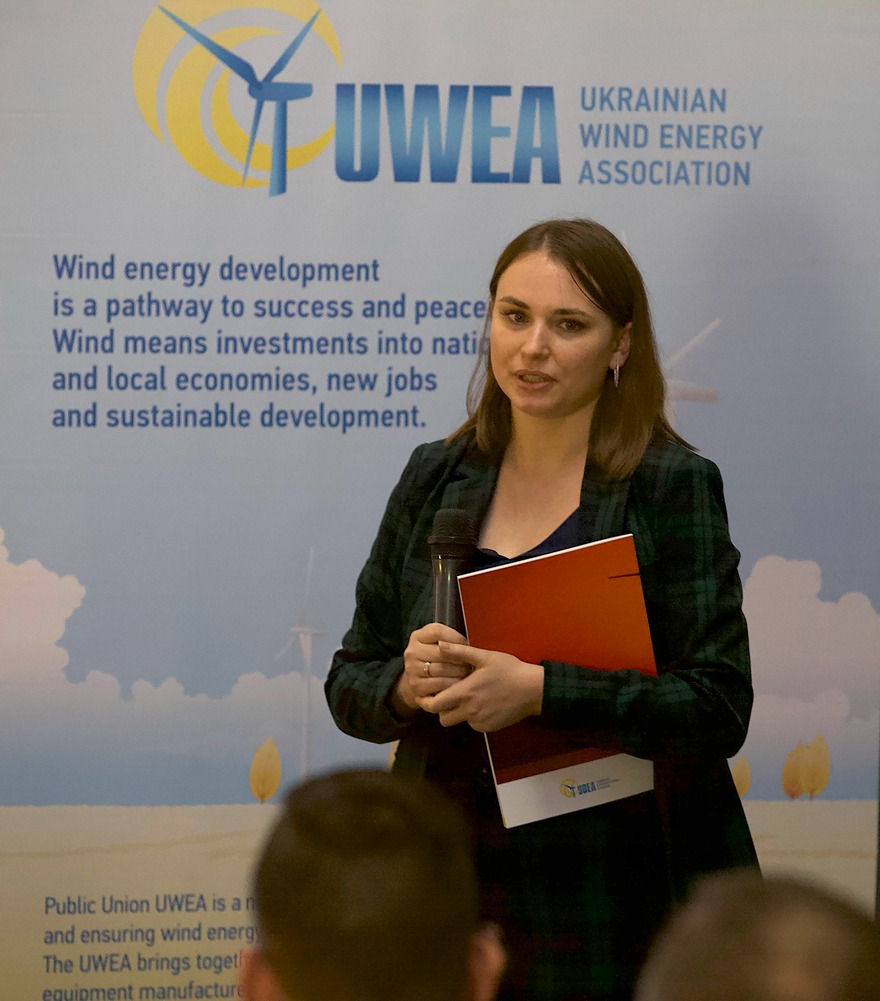
Olena Sichkovska-Chornobyl, an energy counsel at the UWEA and company Notus Energy, who also acted as the project manager, was the first to speak. In her presentation, she outlined the project's objectives, tasks, and findings, drawing the audience's attention to the report's scope, structure, and research methodology.
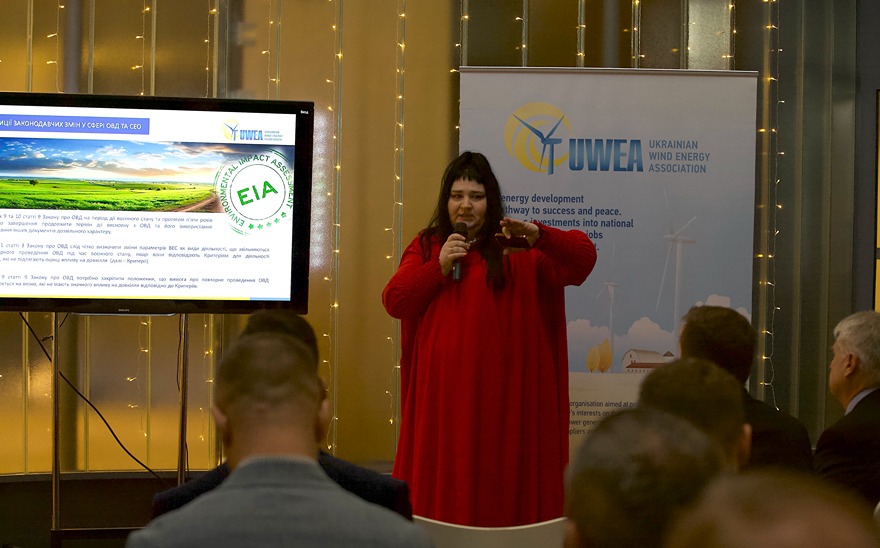
Anzhelika Livitska, a partner at ARZINGER, presented in detail the proposals for necessary changes in EIA and SEA legislation. Thus, Anzhelika recommended exempting wind farms from the requirement to develop a Detailed Territory Plan during the period of martial law and for five years following the conclusion or cancellation of martial law. Furthermore, she stressed that the outdated regulation of general contracting agreements should be canceled, thus creating the preconditions for the use of standard international forms of contracts for the construction of RES facilities.
Serhii Datsiv, senior associate at INTEGRITES, highlighted bottlenecks in the existing procedure for changing the land use designation and proposed to simplify it by excluding conducting the extra EIA. He also proposed applying the “silent consent” principle for approving terms and conditions for the passage of large and heavy vehicles, (approval is automatically granted if no response is received within ten days of the request) and made recommendations on creating preconditions for the use of standard international forms of contracts for the construction of alternative energy facilities, cancellation of outdated regulation of general contracting agreements,
Viktoriya Demydenko, counsel at Asters, presented amendments to the current legislation regarding the location, construction, and maintenance of access roads, as well as changes simplifying obtaining aviation permit and approving the height of wind turbines.
Following Victoria's presentation, another Asters representative at the event, Marta Halabala, counsel, covered the section of the report related to the distribution of cross-border crossings for RES and electricity export.
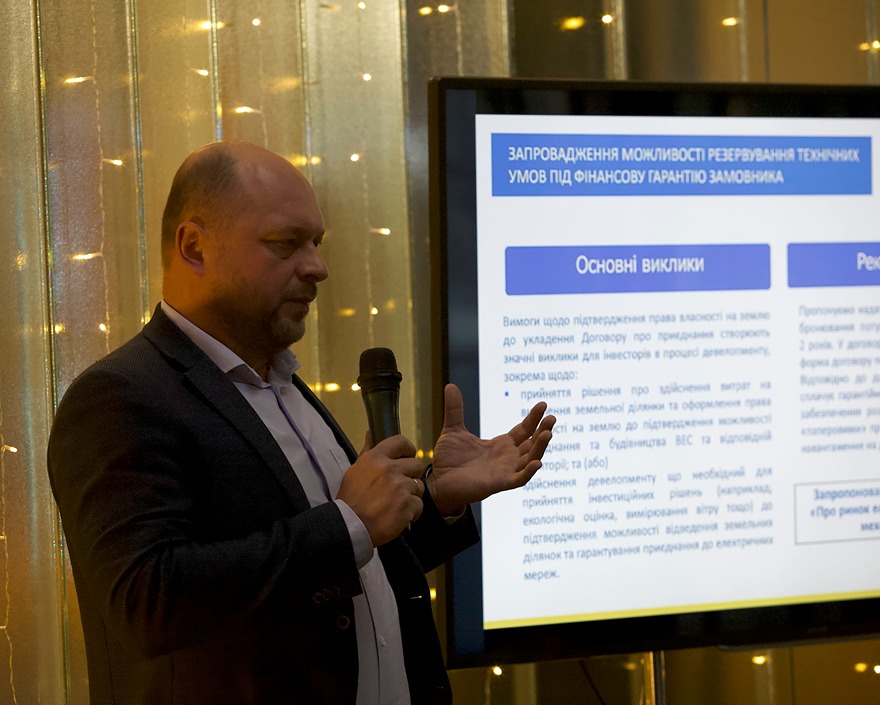
One of the report’s most extensive sections is dedicated to extending the validity of permit documents, particularly technical conditions for grid connections. In his speech, Ivan Bondarchuk, a partner at LCF, not only focused on key challenges of the existing permitting procedure but proposed several solutions, such as capacity booking options, direct connection to consumers, and reforming the mechanism of contracts for difference and feed-in premium.
Serhii Chaus, a manager of the Engineering Department at DTEK Renewables, supported Ivan’s proposals and shared his experience on this issue. Serhii also stressed the need to change the outdated methodology for calculating the power system's operating modes.
Finally, Maksym Sysoiev, a partner at Dentons, elaborated on the proposals regarding the operation of energy storage systems, the creation of the possibility of allowing installed capacity to exceed ordered capacity, considering existing permitted capacity, and the introduction of cable pooling technology
legislative amendments related to grid connections, in particular, to the operation of energy storage facilities and the possibility of “adding” wind and/or solar capacities to an existing RES plant.
UWEA expresses its gratitude to all those involved in the project for their genuine commitment to promoting and speeding up the rollout of wind energy and making Ukraine’s wind market more attractive to international investors and financial institutions.


 Home
Home