
 Authorization

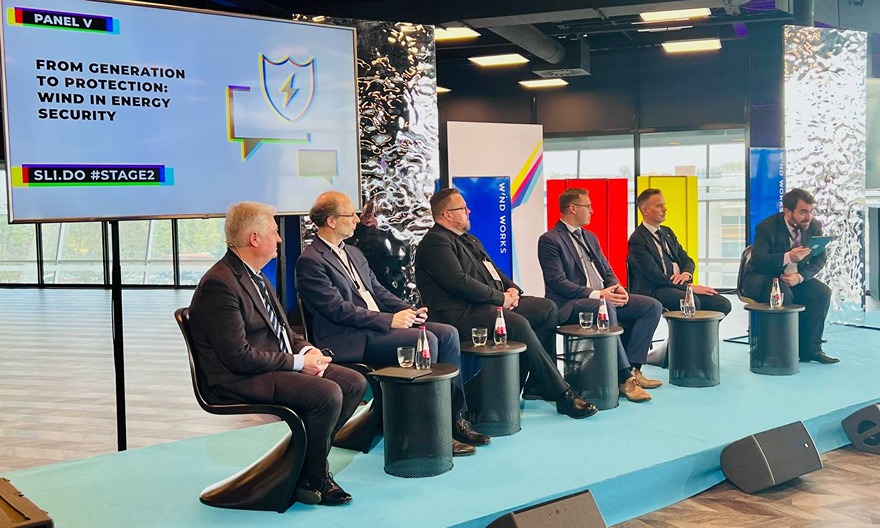
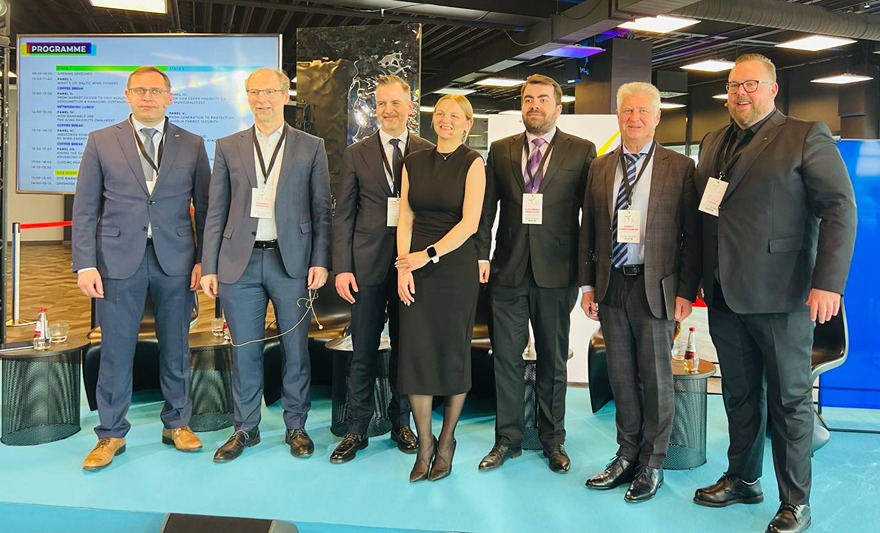
Wind Works – the name of the largest wind energy conference in the Baltic region, which is held annually by three wind energy associations from the Baltic countries. The focus of this year’s event, which was successfully held on April 9 in Riga, the capital of Latvia, was on issues related to the role of wind energy in ensuring countries’ energy security.
In close cooperation with the Latvian transmission system operator AST and with the participation of NPC Ukrenergo, strategic and practical aspects of strengthening energy resilience in the Baltic region were discussed, along with the experience gained by Ukraine since the beginning of the war unleashed by russia against our country.
Wind energy can become the foundation of energy security for the Baltic countries, strengthening independence from energy carriers and geopolitical processes. “Local” sources of energy also help in lowering electricity prices for consumers – this was said by industry experts from Latvia, Estonia, Lithuania and other European states.
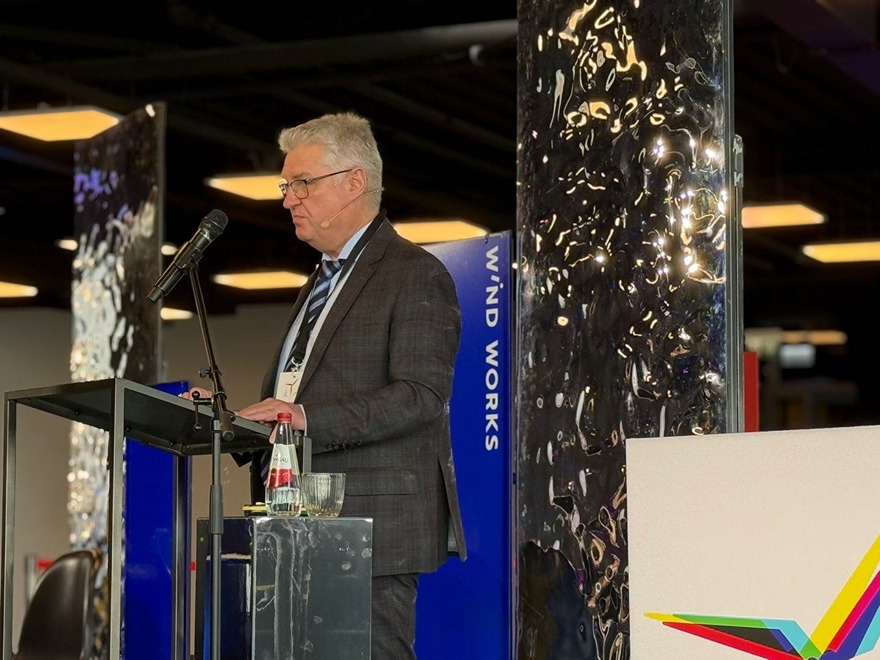
“The dialogue with citizens on the necessity of developing wind energy is one of the challenges for the industry evolution in Latvia, – declared Kaspars Melnis, Minister of climate and energy of the Latvian Republic. – The current European energy crisis allows to better explain the need for energy production in Latvia from local energy sources, which could help to maintain independence from fluctuations in energy prices caused by geopolitical events”. Emphasizing the importance of cooperation between the Baltic states in ensuring energy security, especially regarding the repair of infrastructure damage, he stated: “We have NATO standards, they are the same for everyone. Perhaps, we should also talk about the standards in the energy?”, said the Minister.
The experience of Ukraine in ensuring energy resilience proved to be of particular interest to the conference participants. The Chairman of the Board of the Ukrainian Wind Energy Association, Andrii Konechenkov, shared that the Ukrainian energy policy has been influenced by the Soviet heritage for a long time. Its main principle was decentralization – a single system across the state. However, the annexation of Crimea in 2014 and armed conflict in Donbass have forced to reconsider this strategy, starting the construction of wind power plants (WPP).
“With the beginning of the full-scale invasion russia has been systematically attacking Ukrainian energy infrastructure. As of today, all thermal power plants have been either damaged or completely destroyed. In winter, millions of Ukrainians have stayed without electricity and heat, hospitals switched to generators, the cities were living under outage schedules. This is how the centralized system looks like in the modern world”, – stated Andrii Konechenkov.
He emphasized that, due to the dispersed arrangement of wind turbines within a wind farm, destroying an entire wind power plant would require such a number of missiles that makes such a strike militarily pointless, unlike a thermal power plant, which is a single complex, and damage to a turbine or substation leads to the loss of the production capacity of the entire facility. “In addition, each turbine is an autonomous generator: if one is damaged, the system continues to operate. This is distributed resilience. Decentralization as a principle of security – and it is precisely this principle that we are now consciously embedding into the foundation of Ukraine’s new energy strategy,” said Andrii Konechenkov.
During the international wind energy conference “Wind Works 2026,” a memorandum was also signed on the establishment of a Strategic Baltic Alliance, aimed at accelerating the development of green energy in the region. It was signed by several international companies, including those from Germany, Finland, and Denmark. One of the most important development directions is the project to build a hydrogen production plant in Liepāja, which could significantly influence the development of the energy sector in the Baltic Sea region.

 Home
Home